Quote-to-Deposit Automation Upgrade for Building Inspection Mornington
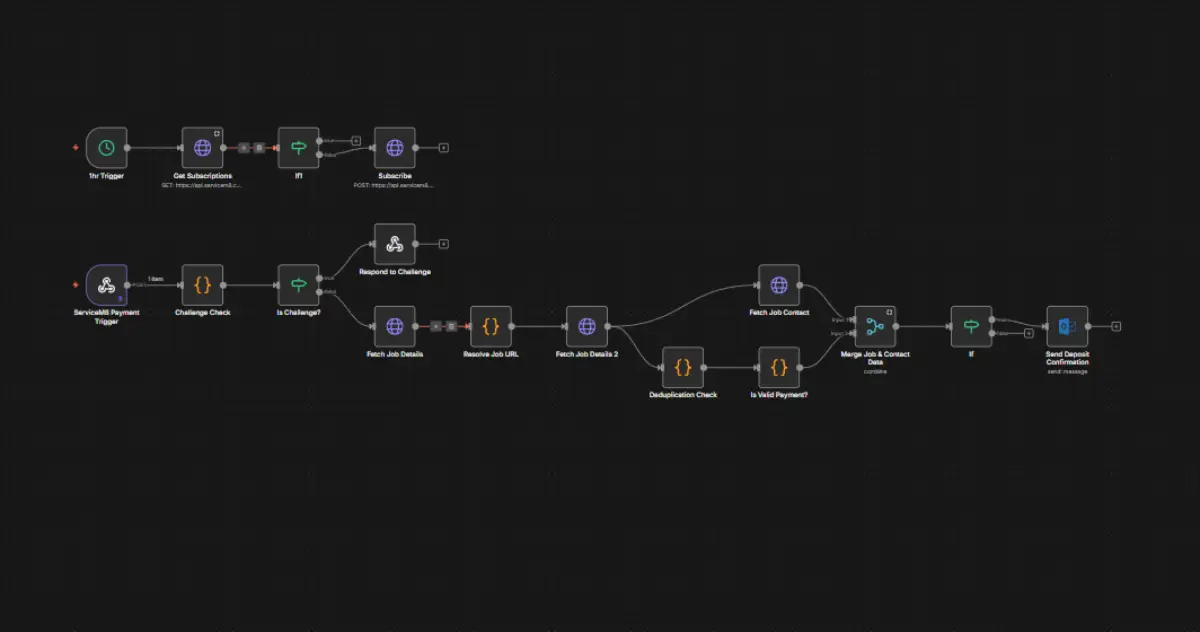
The original quote automation got an upgrade. Now Building Inspection Mornington's clients can request a quote, accept it, and pay their deposit — freeing up the team to focus on the work that actually needs them.
Quote-to-Deposit Automation Upgrade for Building Inspection Mornington
A few months back I wrote about the instant quote automation I built for Building Inspection Mornington — a system that turns a website inquiry into a personalised quote in under five minutes, 24/7. It's been doing its job. At least one new booking a day, no manual replies, no missed leads after hours.
But there was still a gap. After the quote went out, the team had to step in to chase acceptance, send the deposit invoice, follow up on payment, and then finally lock the job in. That's a lot of admin sitting between a "yes" and a confirmed booking — admin that was eating into time the team could spend on the inspection work itself. So I rebuilt the flow end-to-end. Here's what changed.
What the Original System Did — and Where It Stopped
The original automation handled the front half of the customer journey really well. Someone fills out the contact form on the Building Inspection Mornington site, the system processes their inspection details, and a tailored quote lands in their inbox within minutes. Done.
The bottleneck was everything after that. The client would reply saying "yes, let's go" — and from there, the team had to manually generate a deposit invoice, send it, watch the inbox for payment confirmation, and only then mark the job as locked in. None of that work is hard, but it's repetitive, time-sensitive, and exactly the kind of admin that pulls focus away from the actual inspection business.
The Upgrade: A True Quote-to-Deposit Flow
The new version of the system handles the path from inquiry to paid deposit smoothly, so the team can put their attention where it matters. Here's the flow from the client's side:
- They request a quote through the website, same as before.
- They get a personalised quote email — but this one has an "accept" option built right into it.
- The moment they accept, the system generates a deposit invoice.
- They get a follow-up email with the deposit payment details, ready to pay on the spot.
- Once they pay, the job is locked in and ready for scheduling.
The team picks things up at the scheduling stage — that's the part where having a real person on the other end matters. Booking the inspection is a conversation, not a transaction. It's where the client gets to ask questions, talk through their timeline, and feel like they're actually being looked after. That part should stay human, so it does.
Why Records Matter as Much as Emails
Sending the right emails is only half the job. The other half is making sure the back office stays in sync with what the client is doing. At every stage of this flow — quote sent, quote accepted, deposit invoice issued, deposit paid — the appropriate records are created and updated in the team's job management system. By the time someone opens the dashboard to schedule the inspection, the client's record is already complete with everything that's happened so far. No data entry, no copy-pasting between systems, no risk of someone forgetting to log a step.
This is the part that doesn't always get talked about with automations. It's easy to focus on the customer-facing emails because they're the visible part. But if your automation isn't keeping your internal records clean as it goes, you've just shifted the manual work from one place to another.
What This Actually Changes for the Business
Three things stand out from running the upgraded version for a while now:
- Faster deposits. When a client says yes, they can pay within seconds. The momentum from "yes" to "paid" is preserved instead of getting lost in back-and-forth admin.
- More room for the team to focus. The hours that used to go into quote follow-ups, invoice generation, and payment tracking now go back into the actual inspection work — and into the client conversations that benefit from a real person being present.
- Cleaner pipeline visibility. Because every step writes to the records as it happens, the team can see exactly where every lead is at — quoted, accepted, invoiced, paid — without anyone having to update a spreadsheet.
It also means the system genuinely runs around the clock. Someone can request a quote, accept it, and pay their deposit at 2am on a Sunday, and by Monday morning the team just has to reach out to book them in.
The Lesson From This Build
When I built the original automation, the brief was "send a quote fast." It did that well. But the more I worked with Building Inspection Mornington, the more obvious it became that the real bottleneck wasn't the quote — it was everything that happened after it. A fast quote is great, but if the next steps still take a day each, you've only optimised the easy part.
The goal with these builds is never to remove people from the process — it's to take the admin off their plate so they have more time and energy for the parts of the business that genuinely benefit from a human being there. Clients still get to talk to a real person when it matters. The team just isn't buried in invoice admin to get there.
Closing Thoughts
The upgraded system has been quietly doing its thing — turning website inquiries into paid, locked-in jobs and handing them off to the team ready for that scheduling conversation. It's the kind of automation that you stop noticing once it's running, which is exactly how it should feel.
If you're running a service business and your team is buried in quote and invoice admin, there's almost certainly a cleaner way to do it without losing the personal touch your clients value. Happy to chat if you want to figure out what that looks like for your setup — get in touch here.